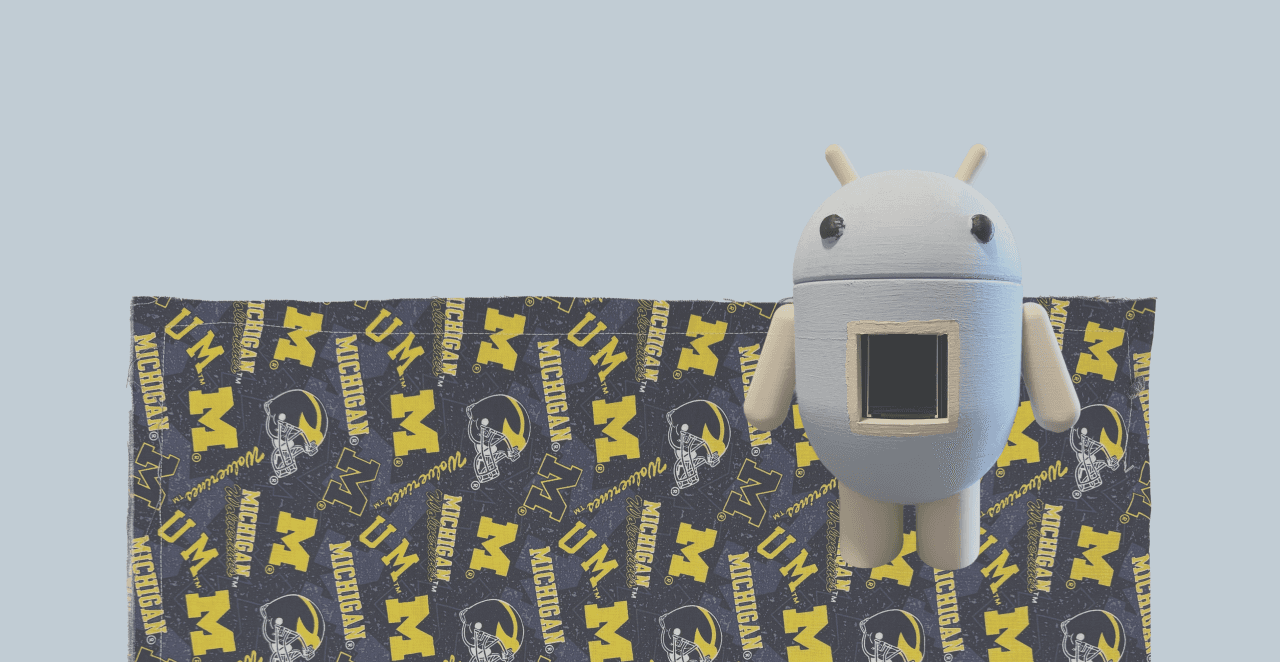
Smart Home Rug - SHRUG
Your Integrated Home Habit Assistant
A smart rug and robot duo that manages your day's transitions so you don't have to think about them.
Client + Project Members
Research + Designers: Joy Huang, Tariq Aziz, Akhila Joshi, Sarah, Lee
My Role
- Developer for WoZ prototyping (C++, javascript, arduino) - Designer for visual screens - 3D rendering of robot model
Impact
- Forward-thinking approach to the future of pervasive interaction design - Tangible steps towards automated assisted HCI applications
Date
Jan.-April 2026 | 15 weeks
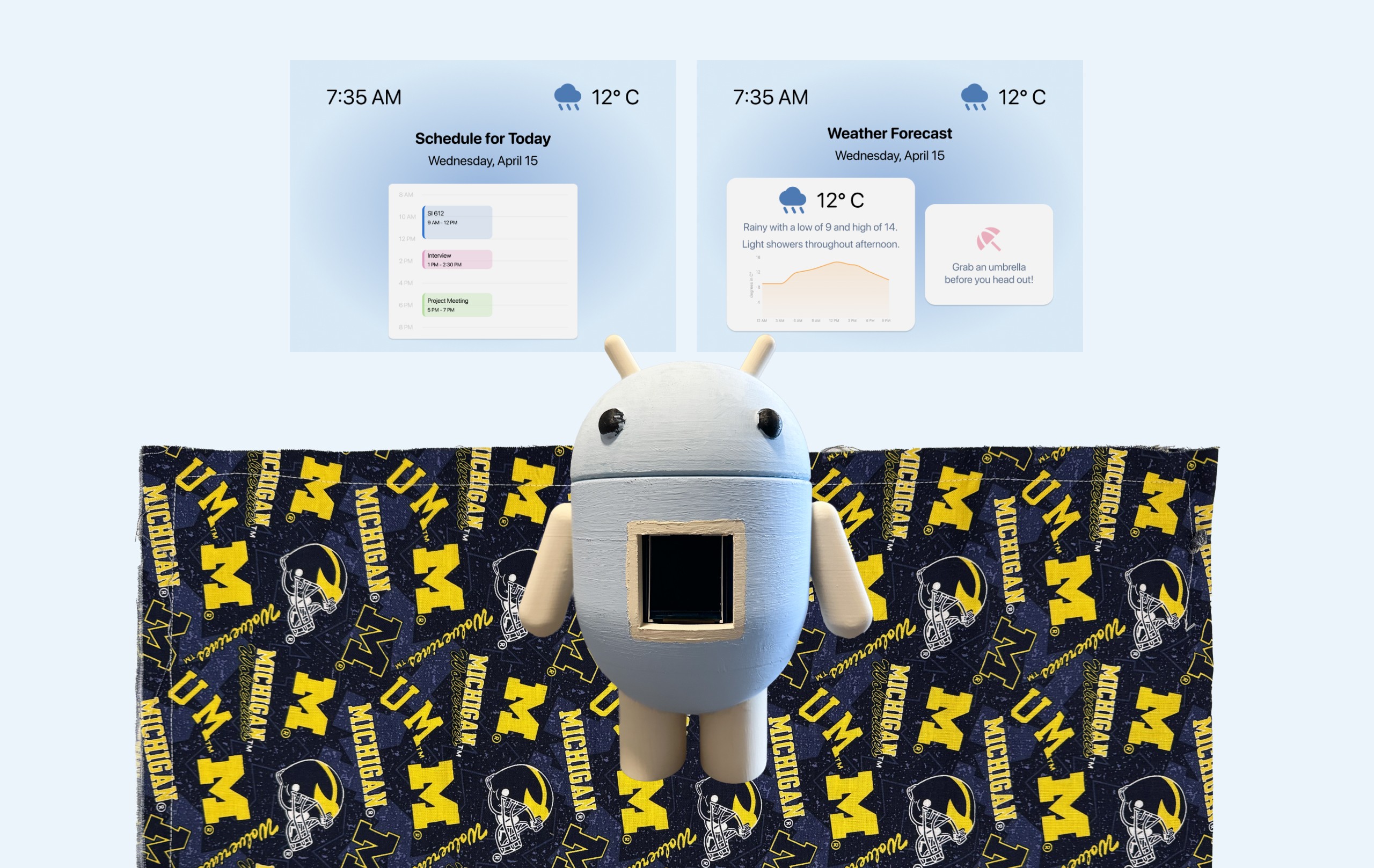
Developed as part of a rigorous, studio-based Advanced Interaction Design course, SHRUG is an intelligent, context-aware system concept consisting of a sensor-equipped smart rug and companion robot designed to minimize cognitive friction in daily home routines, designed using Arduino Photons and systems. SHRUG takes the load off your brain by removing the small but constant decisions that can slow down your morning and weigh on your evening without adding a new device to learn or a new habit to build.
What is our Product?
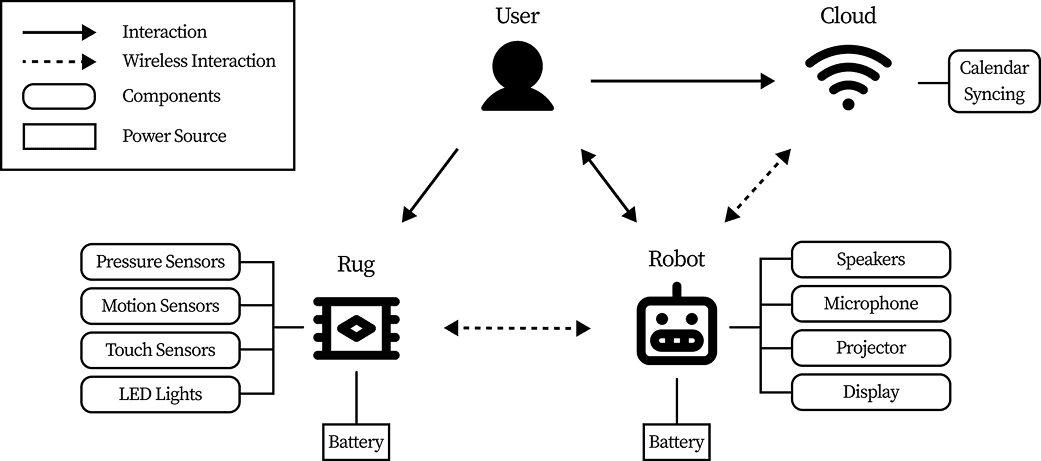
SHRUG is a sensor-equipped smart rug and companion robot designed to reduce the cognitive friction of everyday home routines. SHRUG embeds intelligence into your daily life using pressure, motion, and conductive sensors to detect presence, recognize users, and respond to simple foot gestures.
Watch our video to see SHRUG in action. Check out our project team site.
The System works in 2 parts, together creating a single, ambient system that comes alive under your feet.
Rug | Robot |
|---|---|
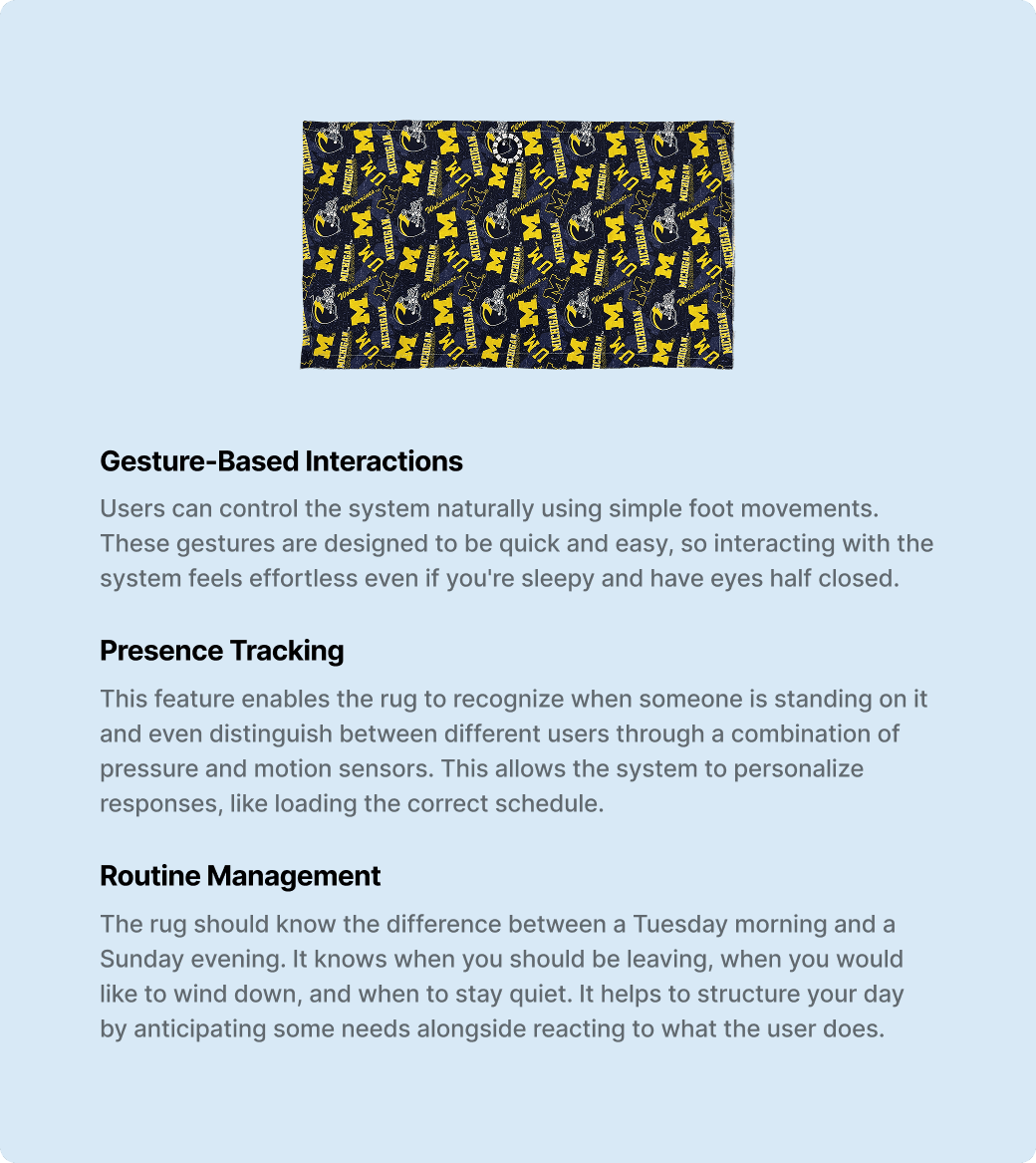
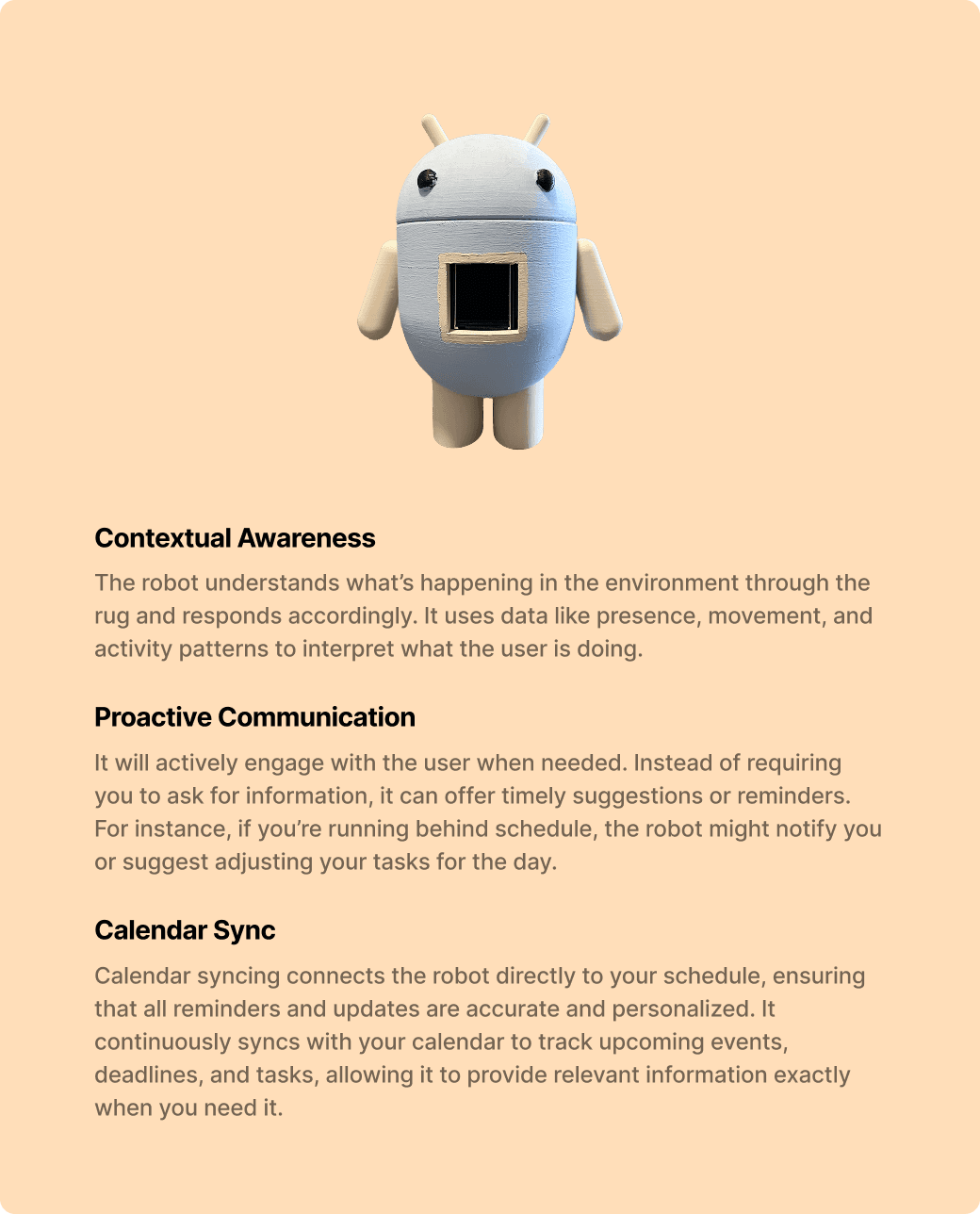
The rug acts as the primary interface, passively monitoring movement and interpreting gesture inputs like taps and swipes to manage schedules, trigger routines, and track daily tasks.  | The companion robot sits nearby and serves as the voice of the system delivering personalized responses, weather forecasts, transit alerts, and end-of-day summaries drawn from the user's existing calendar, reminders, and health apps.  |
Why?
SHRUG is for students and young working professionals who are navigating packed schedules, early mornings, and the constant stress of staying on top of everything.
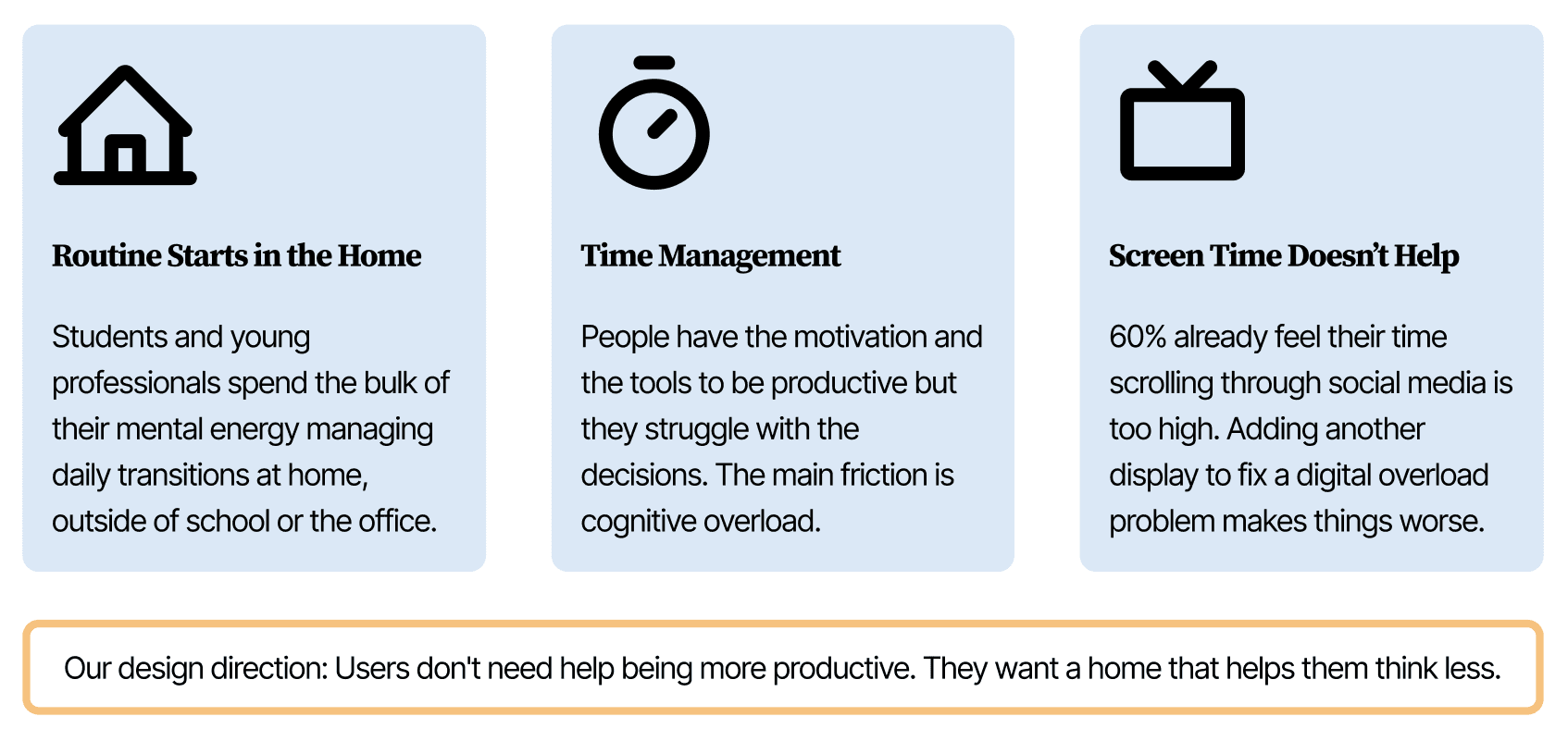
Students and young working professionals spend the bulk of their mental energy managing daily transitions at home, outside of school or the office. Oftentimes, people have the motivation and the tools to be productive but they struggle with the decisions.
They might already be using calendars, reminders, and smart home devices but find that managing all of them adds friction rather than removing it. Here, the main problem is cognitive overload.

What drove our research direction?
Research
Contextual Inquiry
Four graduate students and four working professionals all living in apartment environments in their twenties and thirties. Observations took place in their home during key moments of their daily routines, including morning prep, meal planning, household chores, and workspace organization.
Diary Study
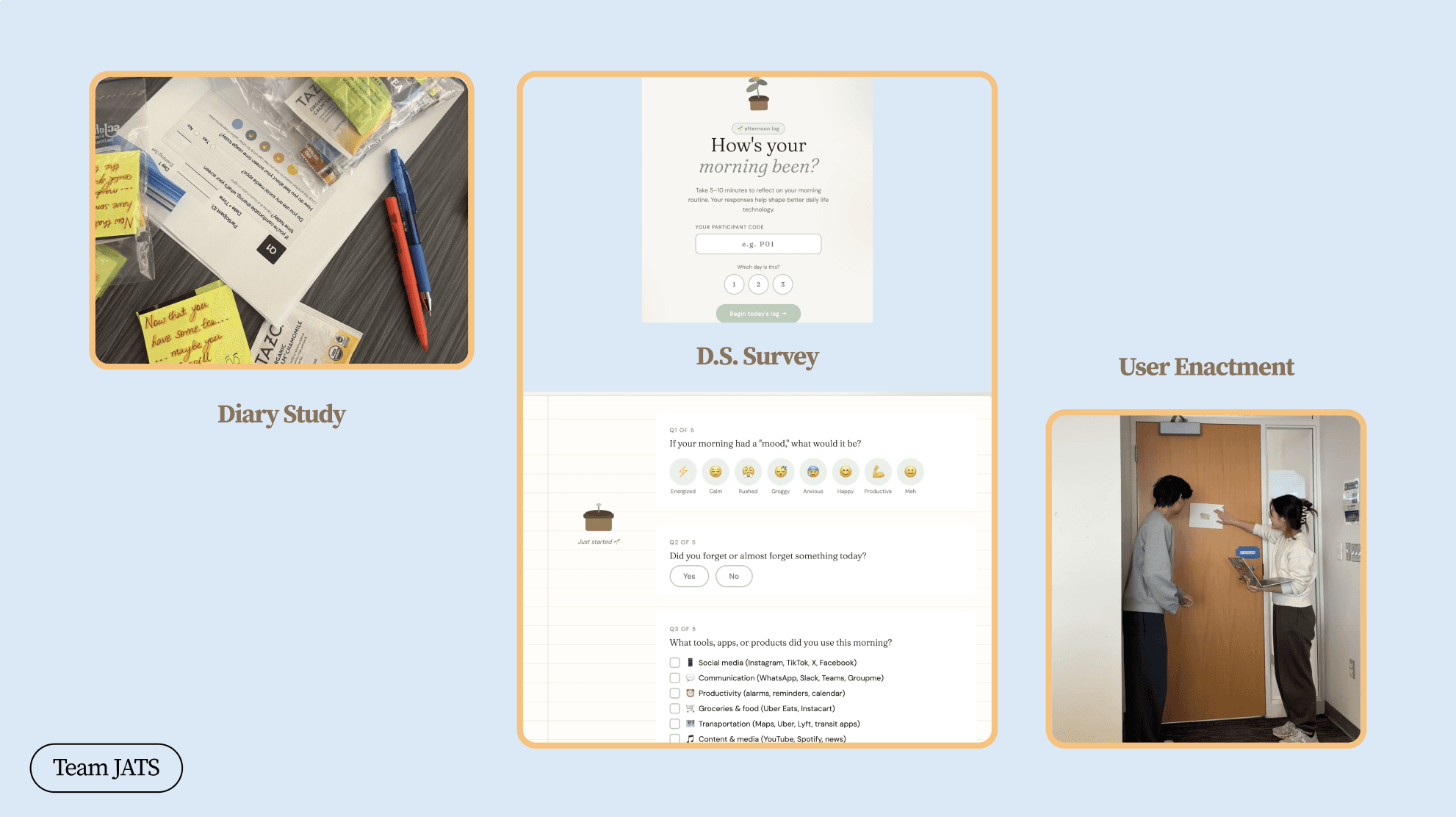
Eight participants captured daily afternoon and evening logs of their emotional state, moments of friction, and useful tools over 3 days. We vibe-coded a digital platform for participants to record their afternoon log on the go and printed physical prompts for them to answer at home in the evening.
Survey
Designed and deployed a survey to broaden our findings beyond 8 participants. In total, 23 people answered our survey and confirmed that the patterns we saw in the diary study weren't just individual quirks.
User Enactments
Five participants from our targeted population acted out seven different scenarios with a Wizard of Oz prototype. These helped us learn which interactions and interface modalities felt natural versus intrusive.
User Persona Maps
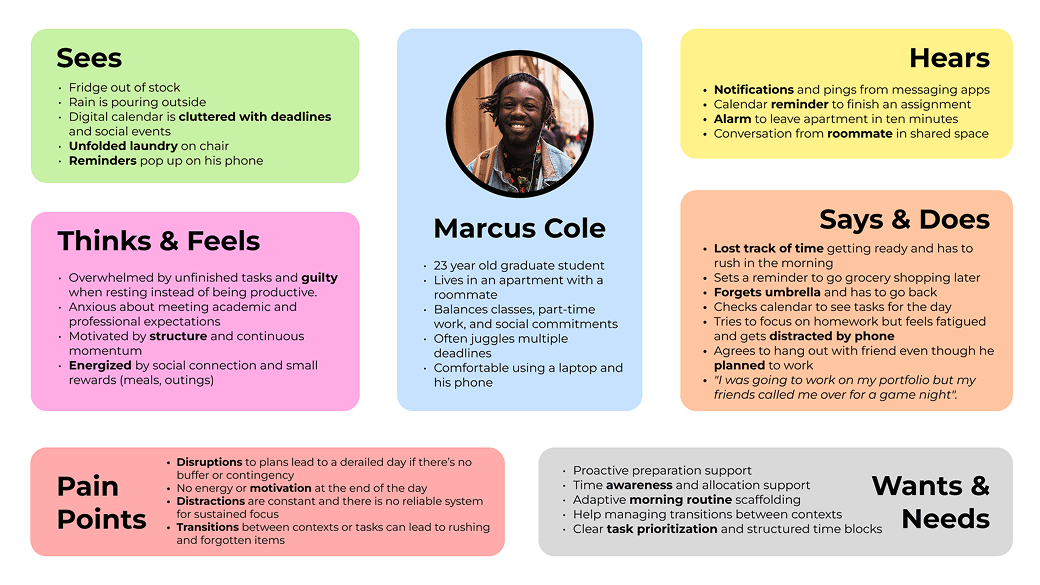
Empathy Map:
To understand our target users better, we developed a persona based on research we conducted.
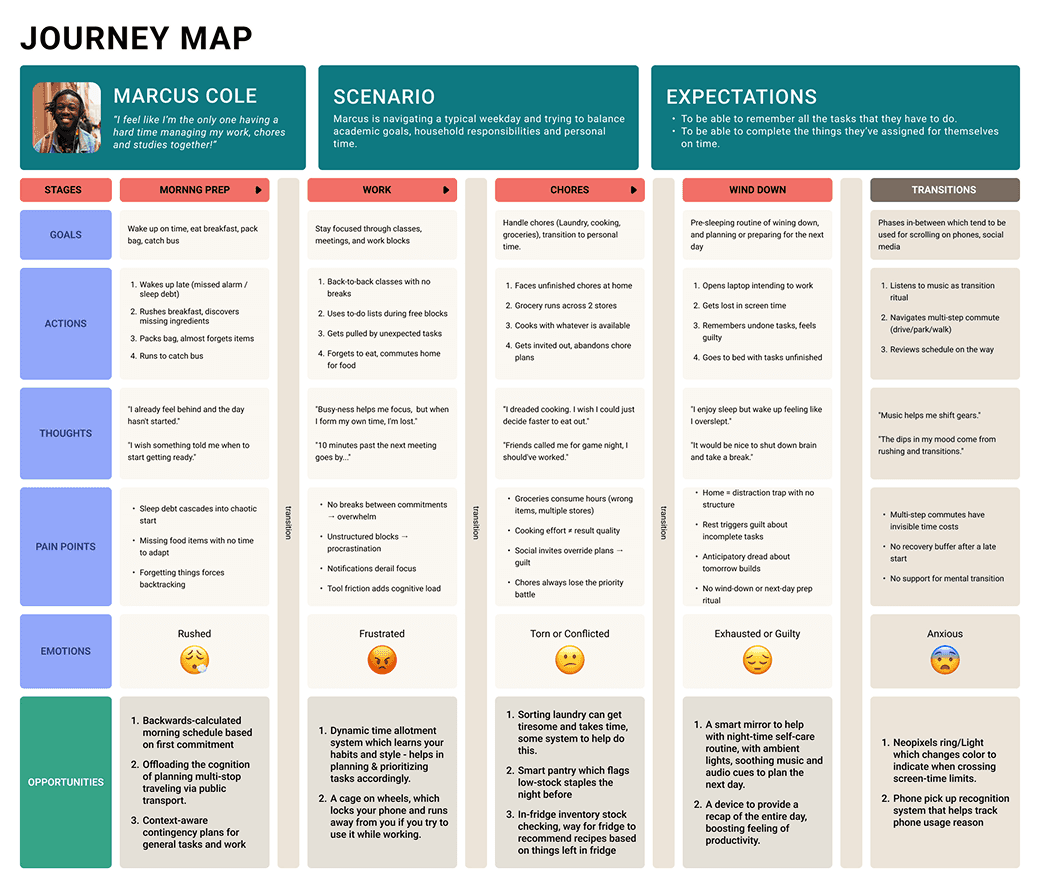
Journey Map:
Understanding our user's journey allowed us to pinpoint transition times as a major catalyst of friction.
Key Insights + Prototyping
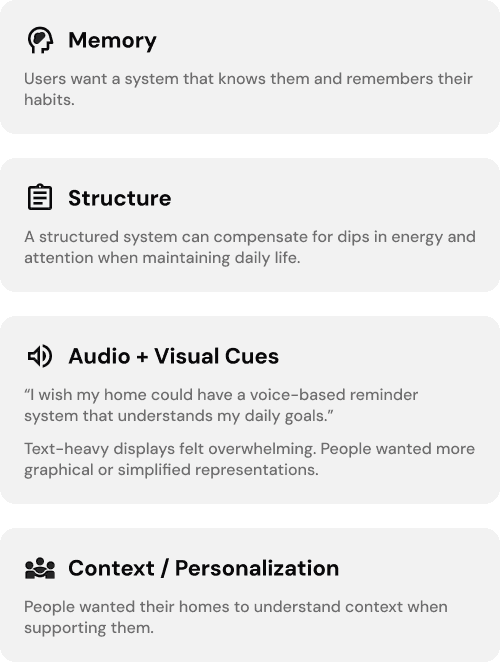
Across all research phases, a consistent pattern emerged around cognitive overload during transition moments, especially mornings and evenings. Participants did not lack tools (calendars, reminders, apps), but rather struggled with fragmentation and decision fatigue.
Prototyping
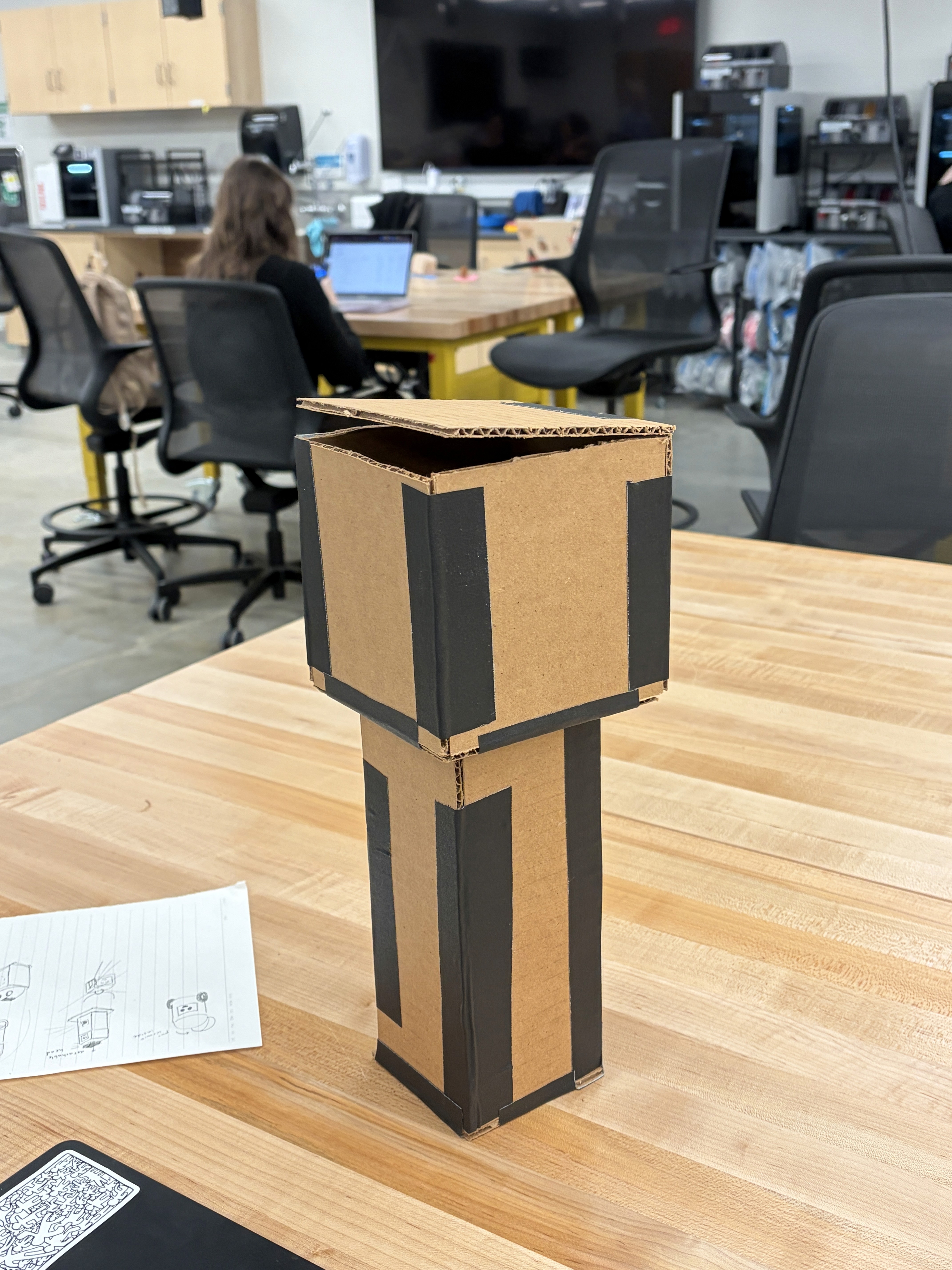
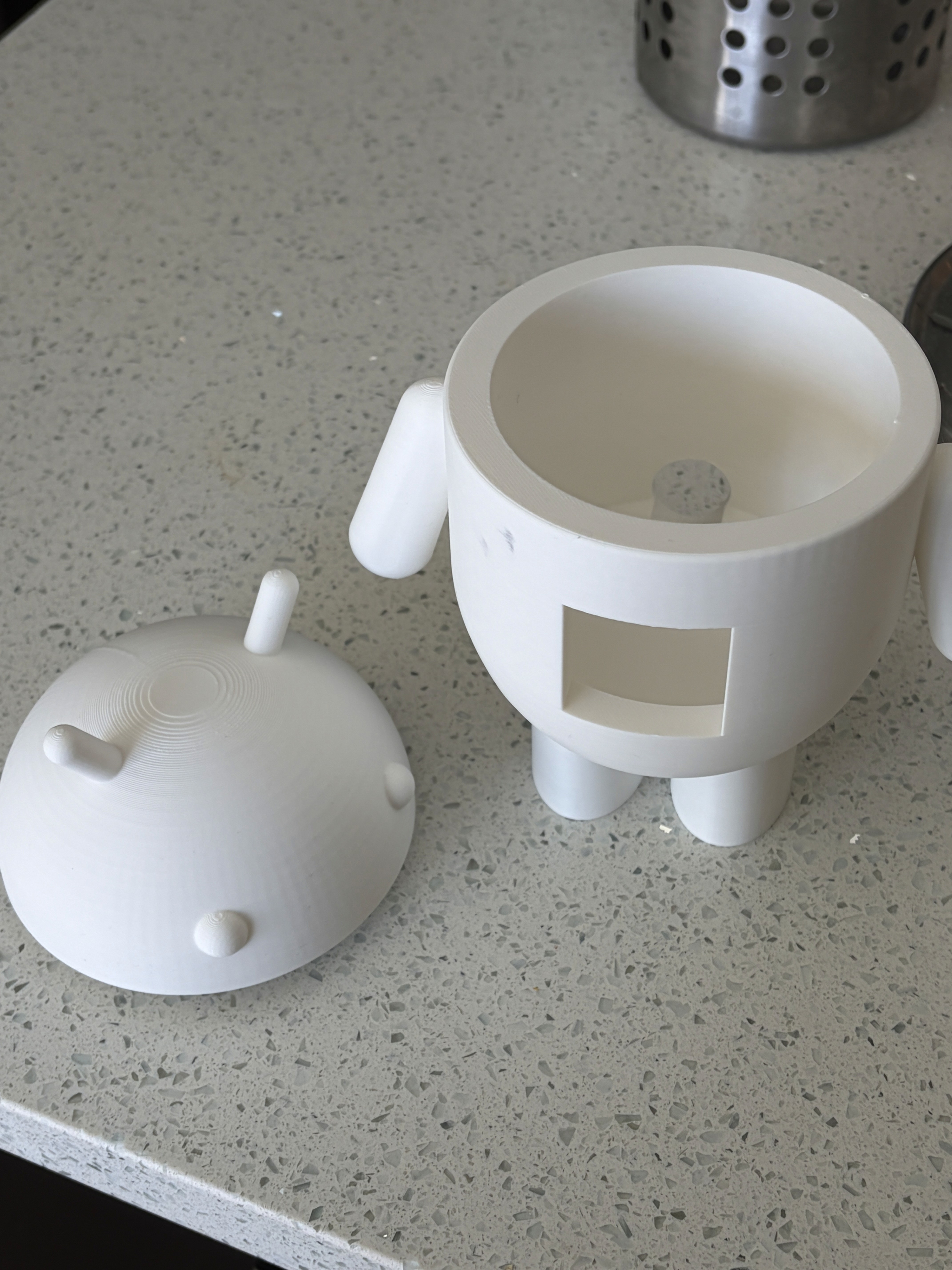
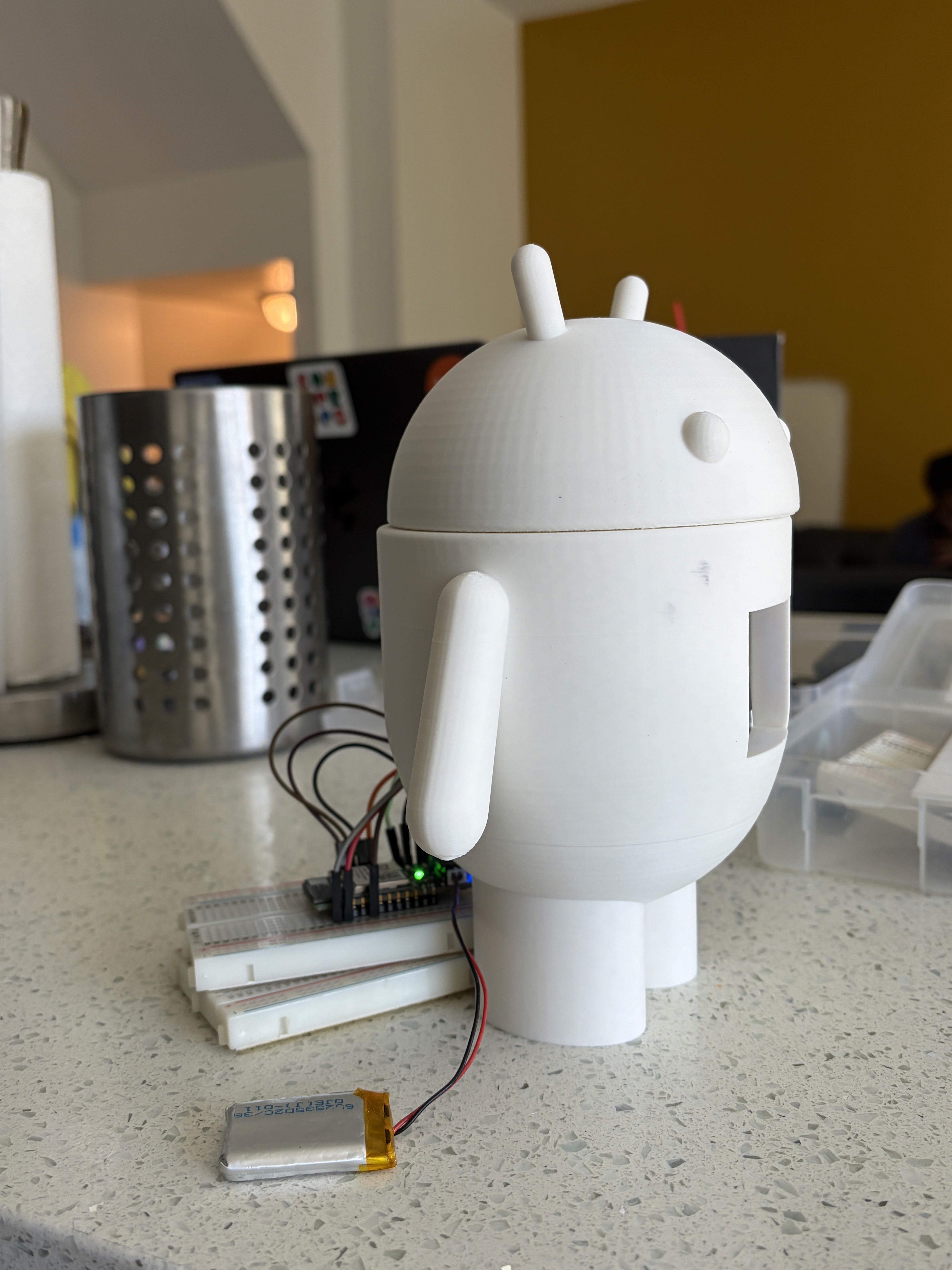
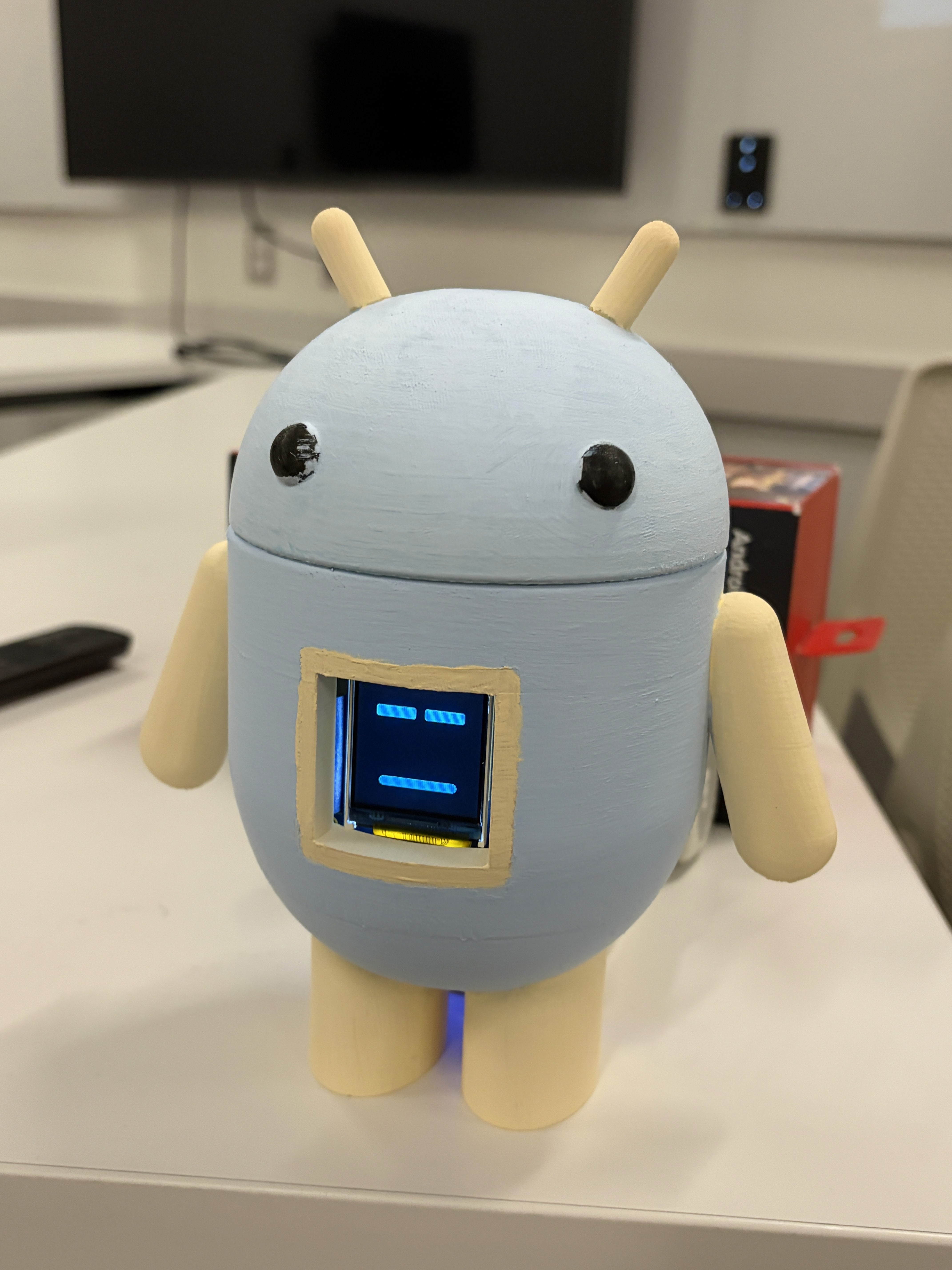
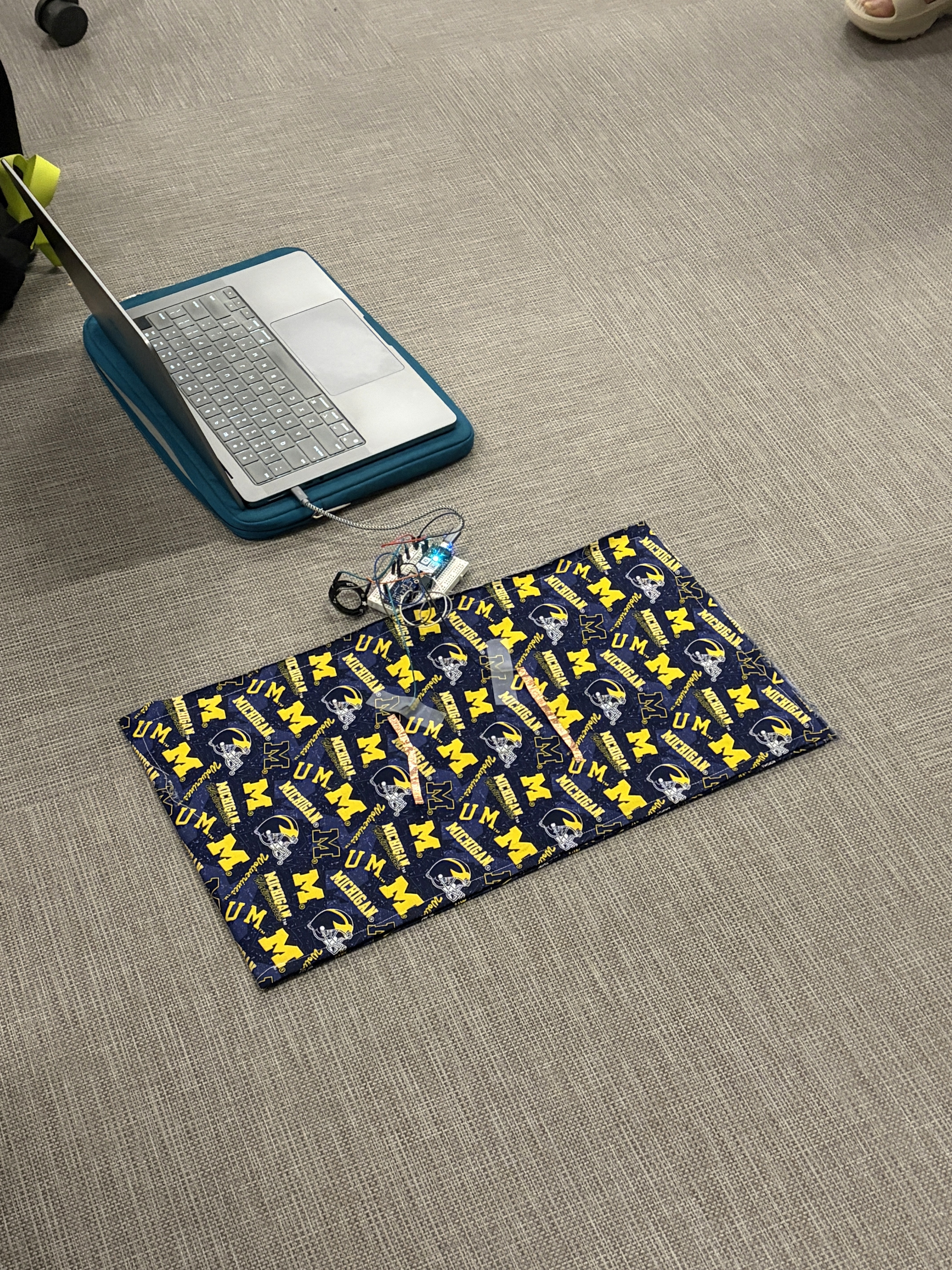
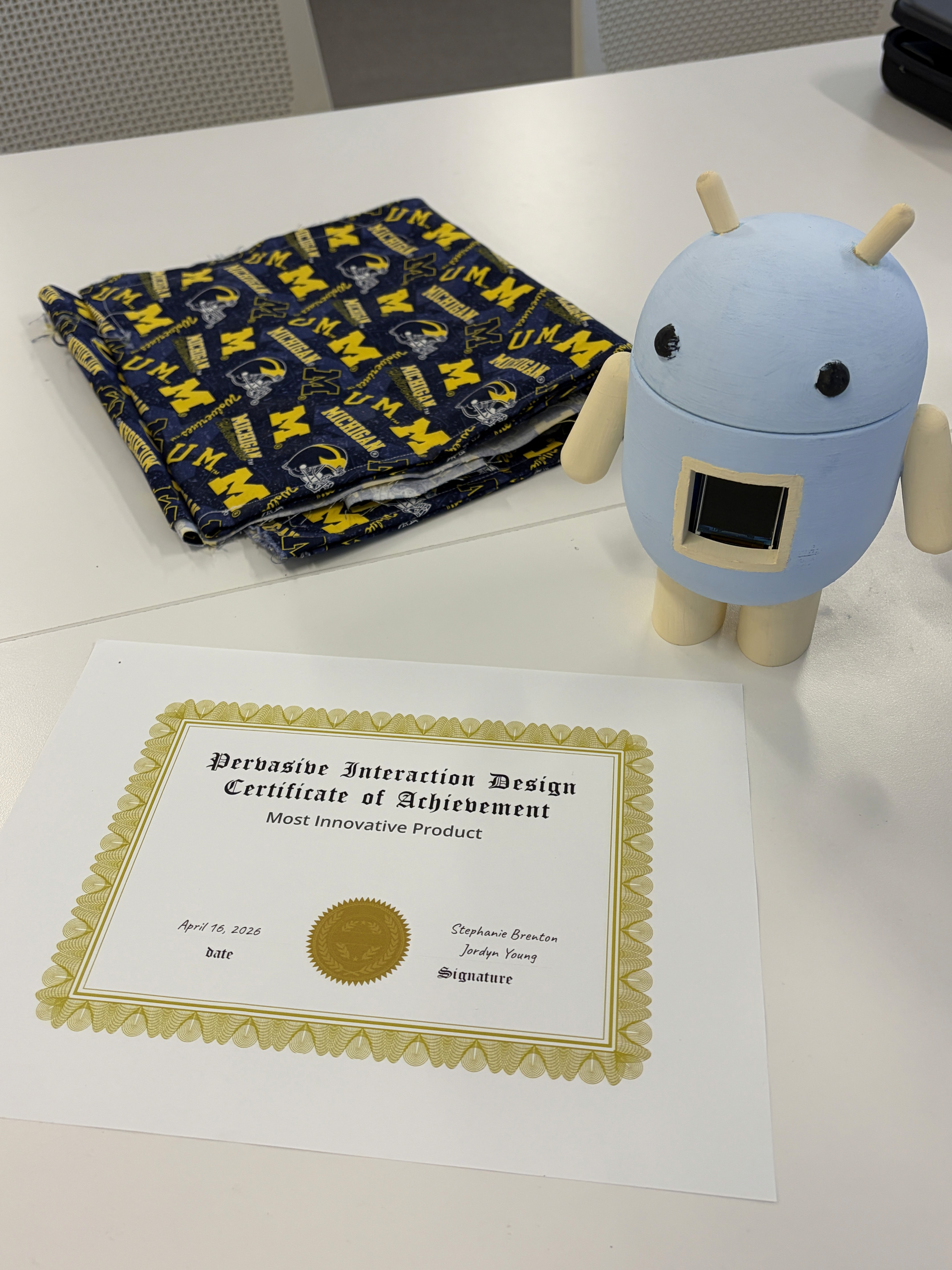
From cardboard models to 3D printed designs connecting to LED diplays, our robot and rug came to life, culminating into a classroom demo that was awarded most innovative product.
Product Features
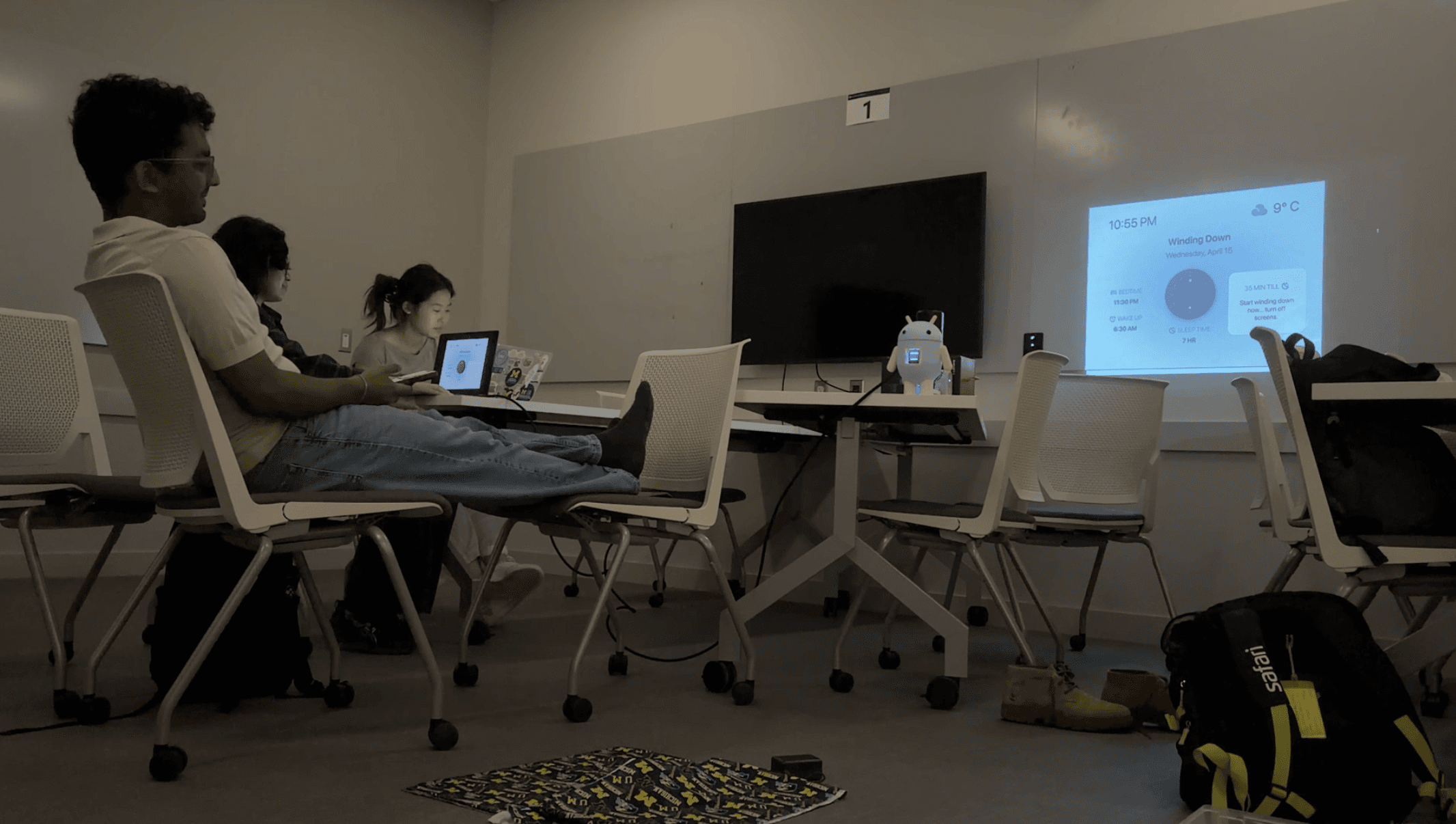
To evaluate the feasibility and usability of SHRUG, we developed a mid-fidelity experience prototype that simulated the system’s core interactions: gesture-based input through the rug paired with contextual voice feedback and a projector from the companion robot.
The rug interface was simulated using pressure-based triggers mapped to simple gestures such as taps and swipes.
The robot interaction was represented through scripted voice responses and a projector screen that delivered contextual information such as schedule reminders, weather updates, and task prompts.
Scenario-based enactments were used to guide the user through realistic use cases, allowing them to interact with the system as they would in their own homes.
Rug Features
Robot Features
Observations:

System Architecture:
Accessibility
A key aspect of accessibility in the system is the companion robot’s dual-mode communication. It supports:
Voice output, allowing users to receive information without needing to look at a screen
A built-in projector, which visually displays information such as schedules, reminders, or prompts onto a nearby wall.
This combination enables the system to adapt to different user needs and contexts.
Users with motor challenges can interact with the system through simple foot gestures, reducing reliance on hand-based input or mobile devices. Users with visual impairments can rely on voice-based feedback for navigation and updates. Users with hearing impairments can access the same information through projected visual cues. In shared or noisy environments, users can choose between or combine both modes depending on convenience.
Additionally, the rug’s passive sensing and gesture-based input minimizes the need for complex interactions, supporting users who may experience fatigue, limited dexterity, or cognitive overload.
Results + Future Steps
What We Accomplished
We created a working prototype that semi-accurately portrays the experiences and features that this product hopes to accomplish. Some features were mock-ups that displayed the functions through Particle Photon components (display screen and rug sensor) and sensors used for small-scale production.
Limitations
Assumed technology feasibility: Some sensing and contextual inference capabilities are conceptual and not fully implemented.
What We Learned
This project reinforced the importance of designing for behavioral realities rather than idealized user intent. While participants expressed strong motivation to be productive, their actual experiences revealed gaps in execution driven by cognitive overload.
The iterative process from contextual inquiry to enactments helped shift our focus from feature-based thinking to experience design, particularly around transitions as critical moments of intervention.
We also learned that ambient and passive interactions can be far more effective in certain contexts than traditional screen-based interfaces, especially within the home environment.
Next Steps
In 3-5 years, we hope to have developed technology that can fully implement the features used in our prototype for mass-production. With calendar syncing, pressure sensors, system syncing, and other components, the system must be built with seamless and personalized features.
For the short term goals, we could refine personalization controls to balance automation and user agency. We could also test in diverse living environments beyond apartments to understand how this system would work in other living situations.
Special thanks and respect to this team for their resilience during our 6-hour working sprees, inspiration in our brainstorming and UX theory talks, and enthusiasm in work and play. Here's some pictures of fun moments we had.
Team lunch break that Tariq generously cooked for us.
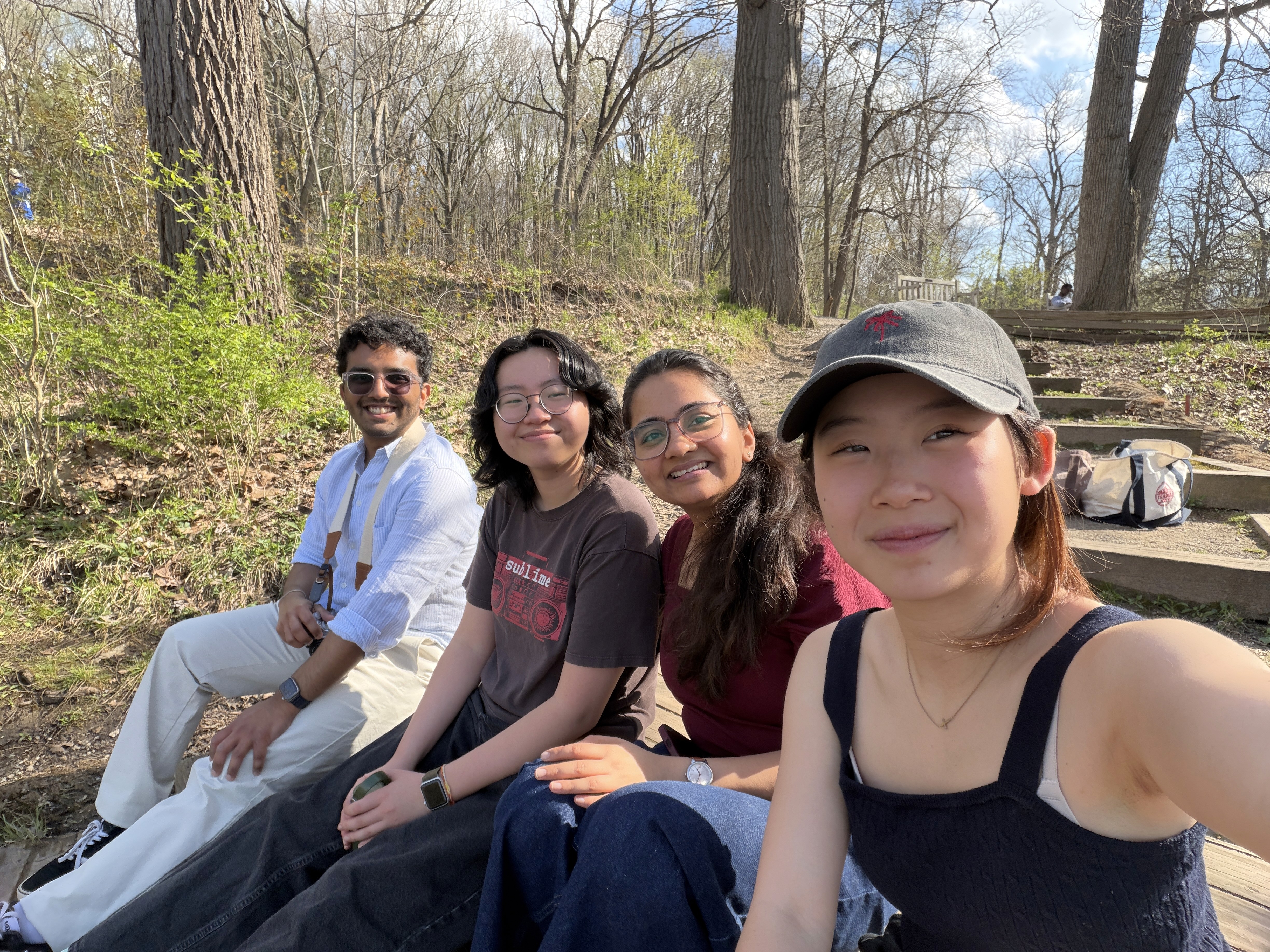
Arb outing with the team. (Ann Arbor's hidden gem)
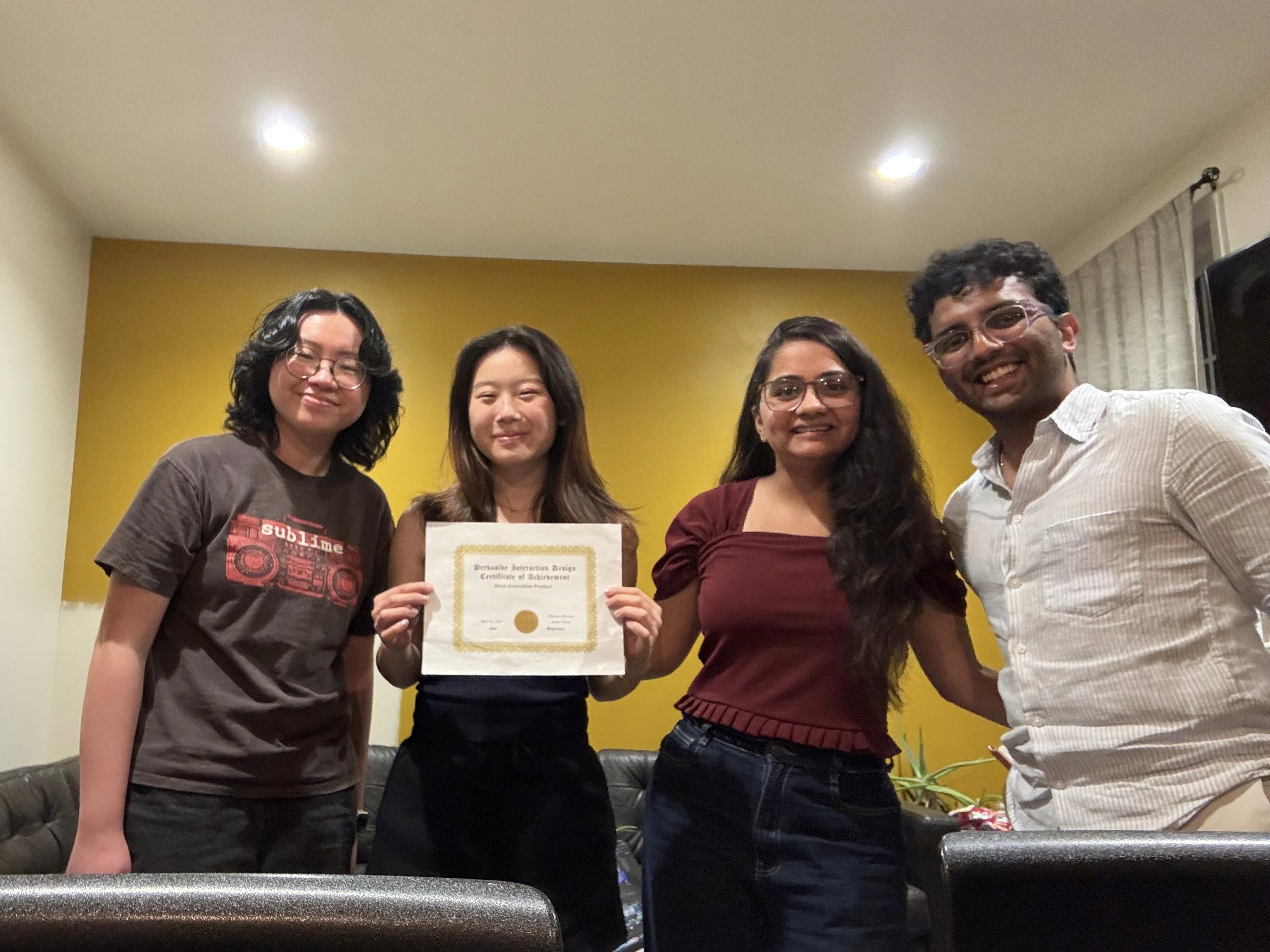
Our hard-earned innovative product award!